Rigid boxes
Magnetic closure box
Grayboard hinged-lid case: bottom, spine with spine allowance, lid, and front flap in one strip with V-grooves, round magnet recess in the flap.
Opens the online editor with this template. Try it without payment details; export with Pro.
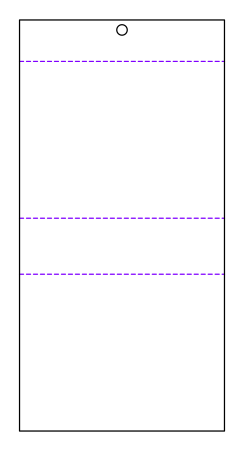
- Template
- Magnetic closure box – case (greyboard)
- Category
- Rigid boxes
- Dimension reference
- Inside dimensions
- Default dimensions
- 203.3 × 154.1 × 52.1 mm
- Parameters
- 6
- Version
- v1
- Template ID
- rigid.magnetic.cover
Dimensions and limits
Default dimensions of the template and the permitted range in mm.
| Dimension | Default | Range |
|---|---|---|
| Length | 203.3 mm | 30–530 mm |
| Width | 154.1 mm | 30–530 mm |
| Height | 52.1 mm | 10–330 mm |
Parameters of this construction
6 parameters with default value and limits, adjustable in the editor.
| Parameter | Default | Range | Note |
|---|---|---|---|
Flap heightflapHeight | 40 mm | 10–330 mm | Inside height of the front flap from the inside of the lid to the free edge. |
Spine allowancespineAllowance | 1 mm | 0–5 mm | The case spine is taller than the interior by this value; the lid closes with some clearance above the tray. |
OverhangcoverOverhang | 1 mm | 0–5 mm | Case overhang beyond the wrapped tray on the left and right. |
Magnetic closuremagnet | on | on / off | Round recess for a disc magnet in the front flap and the tray's front wall; wrap and lining cover the magnets. |
Magnet diametermagnetDiameter | 10 mm | 5–20 mm | Disc magnet diameter; the recess is 0.5 mm larger. |
Magnet distancemagnetInset | 10 mm | 3–150 mm | Distance of the magnet center from the front flap's free edge. |
Components
This construction consists of 5 templates; you open each one separately in the editor.
- Magnetic closure box – case (greyboard)
rigid.magnetic.coverOpen - Magnetic closure box – inside lining
rigid.magnetic.cover.liningOpen - Magnetic closure box – case wrap
rigid.magnetic.cover.wrapOpen - Magnetic closure box – tray (greyboard)
rigid.magnetic.trayOpen - Magnetic closure box – tray wrap
rigid.magnetic.tray.wrapOpen
Assembly
Glue the magnet flush into the flap recess. Wrap and line the case flat, then glue the wrapped tray to bottom and spine and close lid and flap over the tray at the grooves.
Grain direction
Grain direction of greyboard and wrapping paper parallel to the x-axis of the blank: the long grooves fold cleanly, and board and paper do not warp against each other during wrapping (check with the rigid box manufacturer).
Reference note
No external reference is listed in the catalog.
Labels such as “similar to FEFCO” or “ECMA family, unconfirmed” are for orientation only. The templates are our own constructions; an assignment to a standard code is unconfirmed and not a trademark claim.
Frequently asked questions about this template
What does the separate inside lining do?
The inside lining covers the case wrap's turn-ins and the magnet in the flap. It is smaller than the case all around; liningMargin starts at 3 mm. Its hinge lines follow the case. Check glue application and movement on the sample so the lining neither strains nor blocks the hinges when closing.
Which magnet size does the example show?
The individual part's starting value is a disc magnet with a 10 mm diameter. The model creates a 10.5-mm recess in the tray's front wall and flap. Diameter and position are construction values. A fitting opening determines neither magnet thickness within the material nor holding force or polarity. Confirm the magnet, flush installation, and adhesive with the rigid box manufacturer carrying out the work.
Why is the tray's magnet height initially 25 mm?
25 mm is the parameter default for the individually calculated tray template and belongs to the existing preview. The assembly overrides it to match the flap; in the starting case, with 22.8 mm. This distinction matters for assembly. Do not transfer independently calculated magnet positions into a finished assembly without checking their alignment.
What does the spine allowance change?
spineAllowance makes the case spine taller than the interior; the starting value is 1 mm. This leaves clearance between the lid and tray. The allowance also affects the shared magnet height. Change it together with flap height, wrap, and lining, then check closing movement and hinge stress on the actual sample.
Can I disable the magnet opening?
The grayboard components of tray and case have a magnet switch that is enabled by default. The assembly can be calculated without magnet recesses. Wraps and inside lining remain separate parts. This does not create an alternative mechanical closure; the chosen closure solution must suit the case and production process.
Related templates
Customise the Magnetic closure box in your browser
Set dimensions and material, review findings and export print-ready as PDF, SVG or DXF.