Corrugated
Mailer with closure flap
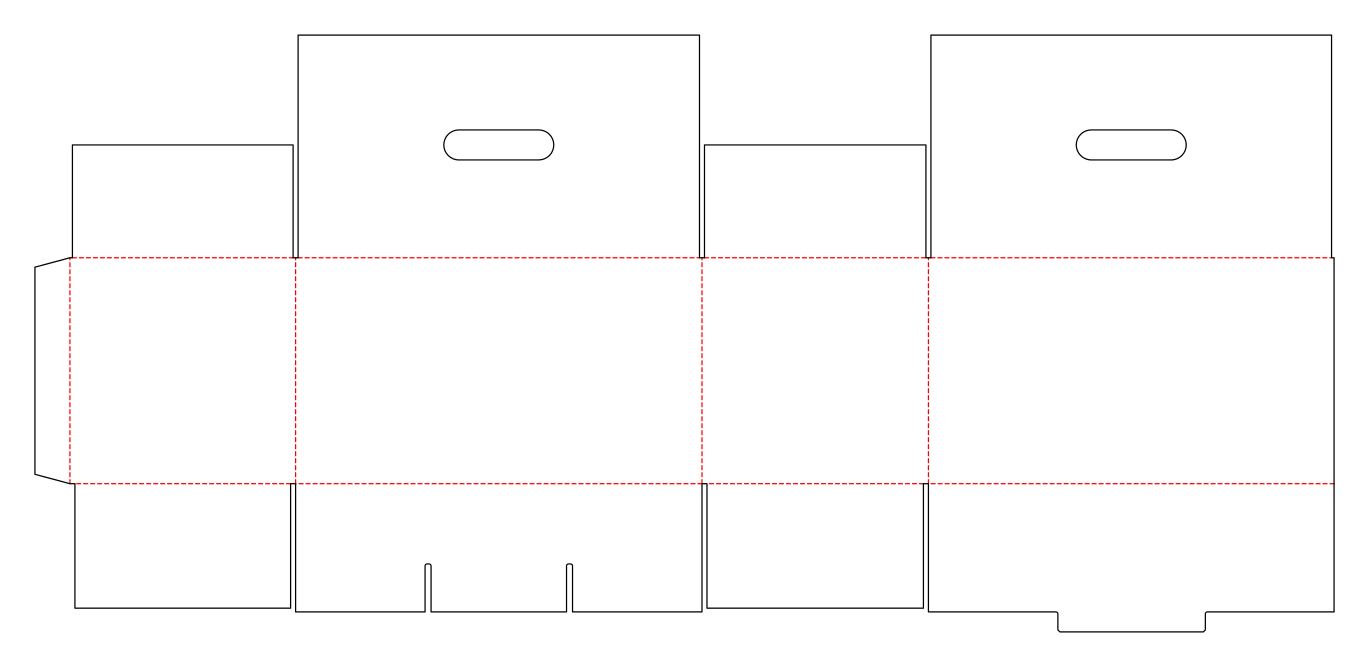
Corrugated mailer with double side walls and ears; the lid overlaps the outside of the front wall with a closure flap sealed by a self-adhesive strip and opened with a tear strip – shipping packaging for online retail.
Opens the online editor with this template. Try it without payment details; export with Pro.
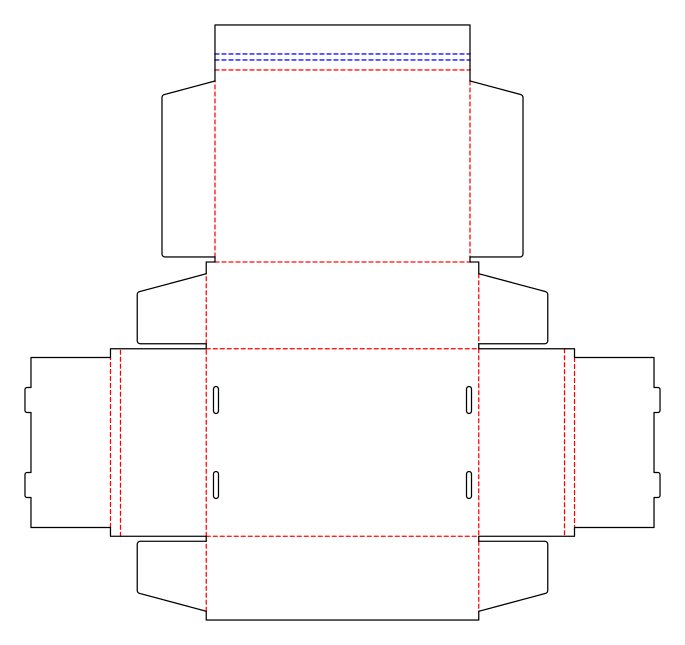
- Template
- Mailer with closure flap
- Category
- Corrugated
- Dimension reference
- Inside dimensions
- Default dimensions
- 250 × 180 × 80 mm
- Parameters
- 14
- Version
- v1
- Template ID
- corrugated.mailer.flap
Dimensions and limits
Default dimensions of the template and the permitted range in mm.
| Dimension | Default | Range |
|---|---|---|
| Length | 250 mm | 60–600 mm |
| Width | 180 mm | 60–600 mm |
| Height | 80 mm | 40–300 mm |
Parameters of this construction
14 parameters with default value and limits, adjustable in the editor.
| Parameter | Default | Range | Note |
|---|---|---|---|
Rim widthrimWidth | 10 mm | 3–20 mm | Width of the double wall's foldover (crease to crease); accommodates the flaps in the pocket. |
Flap gapflapGap | 5 mm | 1–10 mm | Gap between neighboring flaps or walls; at least approximately the material thickness. |
Ear length (ratio)earRatio | 80 % | 50–95 % | Length of the ears or corner flaps as a ratio of half the inside width. |
Lid dust flaps (ratio)lidFlapRatio | 70 % | 30–95 % | Length of the lid's dust flaps as a ratio of the inside height. |
Dust flap angledustFlapAngle | 15° | 0–30° | Bevel of the dust flaps (also the ears on the mailer); larger angles prevent collisions during folding. |
Lock tabslockTabs | on | on / off | Locks the inner walls with tabs in slots in the base. |
Number of lock tabslockTabCount | 2 | 1–4 | Number of locking tabs per wall. |
Lock tab widthlockTabWidth | 25 mm | 10–60 mm | Width of a locking tab. |
Lock tab depthlockTabDepth | 6 mm | 2–15 mm | How far a locking tab protrudes; at least material thickness plus clearance. |
Bottom slot widthslotWidth | 5 mm | 1–10 mm | Width of the slots in the base for the locking tabs; at least the material thickness, with clearance from the crease. |
Closure flap depthclosureFlapDepth | 45 mm | 30–100 mm | Depth of the closure flap glued to the outside of the front wall; no deeper than the front wall is high. |
Closure adhesive stripsealStripWidth | 15 mm | 10–40 mm | Width of the self-adhesive strip on the closure flap (5 mm margin to the edge). |
Tear strip widthtearStripWidth | 6 mm | 3–15 mm | Distance between the tear strip's two perforations; the tear thread lies between them. |
Tear strip offsettearStripOffset | 10 mm | 5–50 mm | Distance of the tear strip from the flap crease; tear and adhesive strips must fit side by side on the flap with clearance. |
Assembly
Erect front and back walls and fold the ears inward. Erect side walls, fold the rollover with the inner wall over the ears, and insert the tabs into the bottom slots. After filling, fold in the lid dust flaps, close the lid, remove the release liner, and press the closure flap against the outside of the front wall. To open, grip the tear thread and tear out the strip.
Grain direction
Flute direction parallel to the blank's y-axis: The double-wall creases fold neatly, while lid hinge and tuck flap stay stiff (check with a test print shop).
Reference note
similar to FEFCO 0421 · classification unconfirmed
Labels such as “similar to FEFCO” or “ECMA family, unconfirmed” are for orientation only. The templates are our own constructions; an assignment to a standard code is unconfirmed and not a trademark claim.
Frequently asked questions about this template
Does the front wall have locking slots?
This type does not provide slots in the front wall for the lid closure. The closure flap is glued to the outside of the wall. Bottom slots remain because they receive the double side walls' locking tabs. Do not confuse this assembly lock with the self-adhesive lid closure.
How is the flap depth limited?
closureFlapDepth begins at 30 mm and extends to 100 mm in the parameter range. The frontWall constraint additionally limits depth relative to the actual front wall. The flap needs clearance from the bottom. A value within the table range may therefore still be invalid for a low mailer.
What happens if the adhesive strip is too wide?
Adhesive strip and tear strip must fit on the same flap with clearance between them. The stripsFitClosureFlap constraint compares their dimensions with the flap depth. Adjust width, spacing, and flap together. Moving a strip after SVG export would bypass this check and does not represent a documented parameter configuration.
Is the tear thread a cut line?
No. The perforation lines define the tear strip; the thread is an annotation about the intended processing. The export adds no real thread. Coordinate material, position, and processing with the manufacturer and check whether the strip separates along the intended outline when opened.
Is a return closure included?
V1 has one self-adhesive strip and one tear strip. A separate second adhesive strip is not provided. Resealability for returns is therefore not established. If the box needs repeated opening, check the mailer with locking tabs and coordinate transit securing using a sample.
Related templates
Customise the Mailer with closure flap in your browser
Set dimensions and material, review findings and export print-ready as PDF, SVG or DXF.