Corrugated
Corrugated telescope box
Base of the corrugated telescope box: bottom with four walls and glued corner flaps.
Opens the online editor with this template. Try it without payment details; export with Pro.
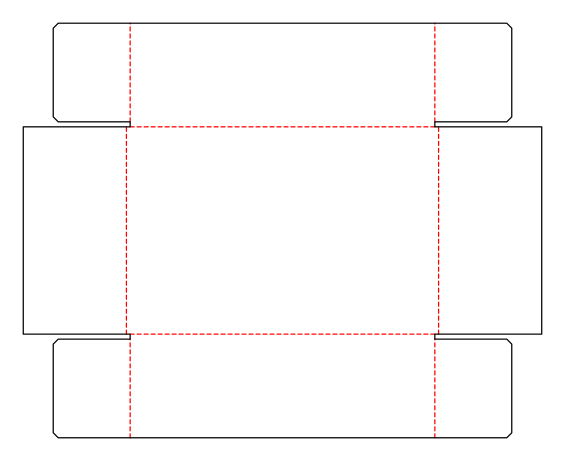
- Template
- Telescope box – base
- Category
- Corrugated
- Dimension reference
- Inside dimensions
- Default dimensions
- 300 × 200 × 100 mm
- Parameters
- 2
- Version
- v1
- Template ID
- corrugated.telescope.base
Dimensions and limits
Default dimensions of the template and the permitted range in mm.
| Dimension | Default | Range |
|---|---|---|
| Length | 300 mm | 80–600 mm |
| Width | 200 mm | 80–600 mm |
| Height | 100 mm | 20–300 mm |
Parameters of this construction
2 parameters with default value and limits, adjustable in the editor.
| Parameter | Default | Range | Note |
|---|---|---|---|
Flap gapflapGap | 5 mm | 1–12 mm | Gap between neighboring flaps or walls; at least approximately the material thickness. |
Ear length (ratio)earRatio | 80 % | 50–95 % | Length of the ears or corner flaps as a ratio of half the inside width. |
Components
This construction consists of 2 templates; you open each one separately in the editor.
Assembly
Erect the front and back walls, fold the corner flaps inward, erect the end walls, and glue them to the corner flaps.
Grain direction
Grain direction vertical on the blank (check)
Reference note
similar to FEFCO 0301 · classification unconfirmed
Labels such as “similar to FEFCO” or “ECMA family, unconfirmed” are for orientation only. The templates are our own constructions; an assignment to a standard code is unconfirmed and not a trademark claim.
Frequently asked questions about this template
Why does the lid have different dimensions from the base?
The lid must fit over the base's outer walls. Its inside cross section is therefore the base's outside dimensions plus twice the clearance per side. The starting example in B flute gives 312 × 206 mm outside at the base and, with 2 mm clearance per side, 316 × 210 mm inside at the lid.
Are the base and lid a single blank?
No. Each component has its own blank, parameters, and metrics. The figures appear in sequence on this page; the first group of metrics belongs to the base, the second to the lid. Components can be documented together in the assembly export. Keep their dimensions distinct when printing or cutting the sample.
Can I use crease-to-crease dimensions?
These two component templates support inside and outside dimensions. Crease-to-crease dimensions are not offered for the glued corners because the end wall and corner flap overlap, making the reference ambiguous. Choose the reference before calculation. You need the calculated outside dimensions of the base to determine lid fit.
How long must the corner flaps be?
earRatio specifies length as a proportion of half the inside width. The range is 50–95 %, with a starting value of 80 %. The glueable width must also meet the material minimum. Small widths with thick corrugated board can violate this constraint despite a valid parameter range; confirm gluing with your print shop.
What does ASM-002 check?
The rule warns when the lid's inside height exceeds the base's outside height. The lid then does not rest on the base as intended. Matching length and width alone is insufficient. Check the desired coverage and lid height along with fit on the glued assembly.
Related templates
 CorrugatedFolding tray with lock cornerscorrugated.tray
 CorrugatedHalf slotted containercorrugated.halfslotted
 CorrugatedFull overlap slotted containercorrugated.rsc.fulloverlap
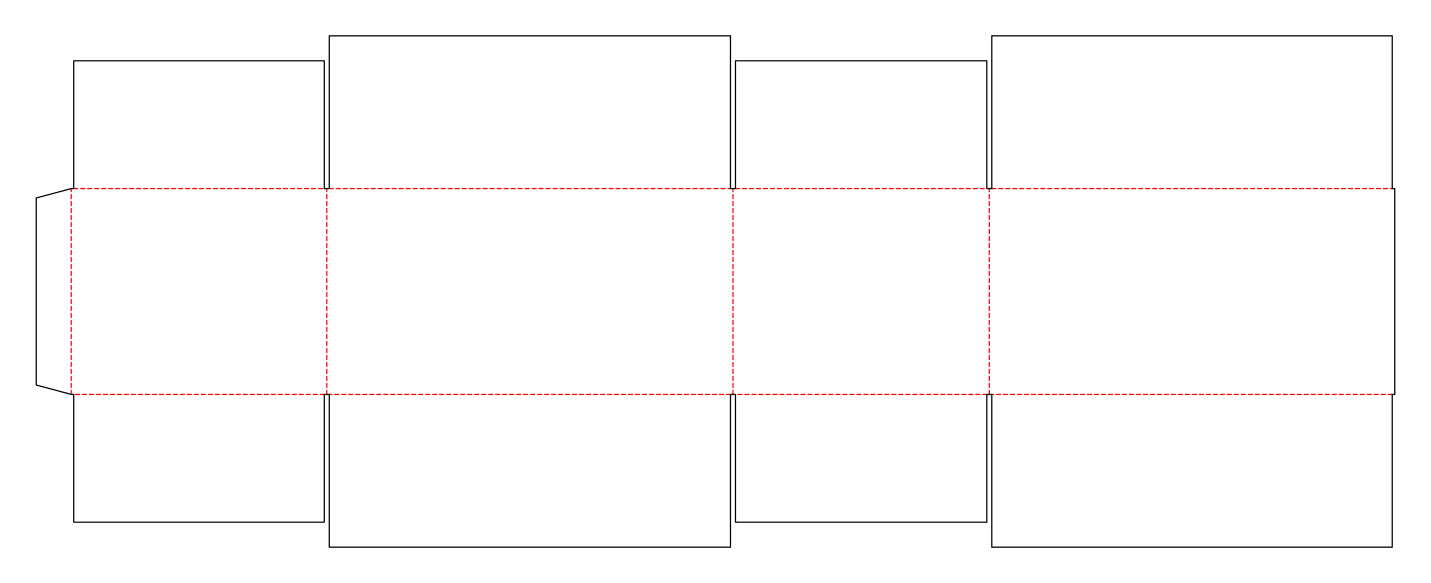 CorrugatedOverlap slotted containercorrugated.rsc.overlap.outer
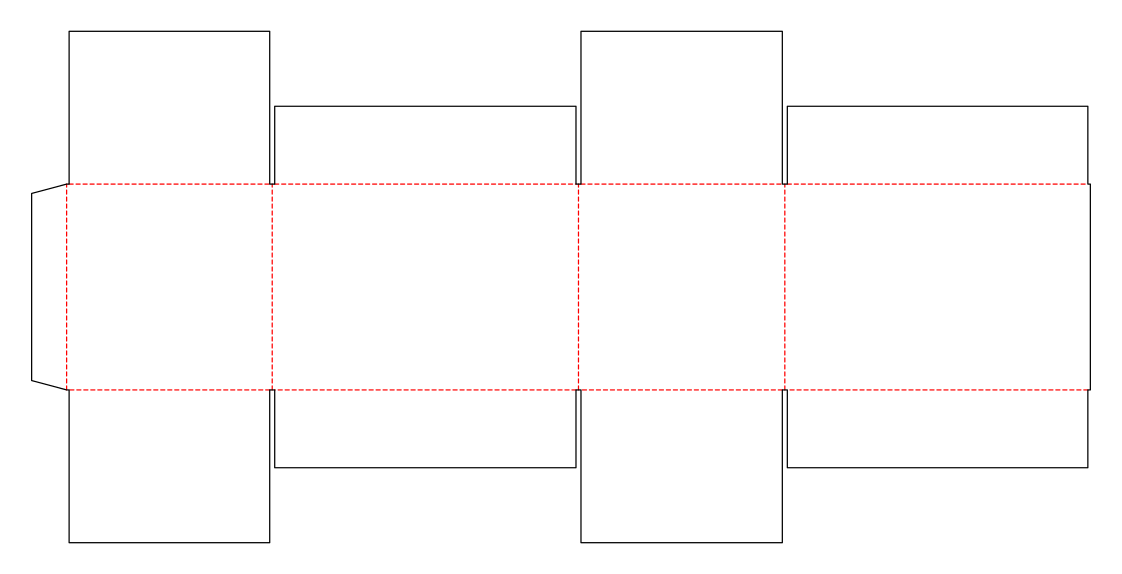 CorrugatedSlotted container with meeting inner flapscorrugated.rsc.innerfull
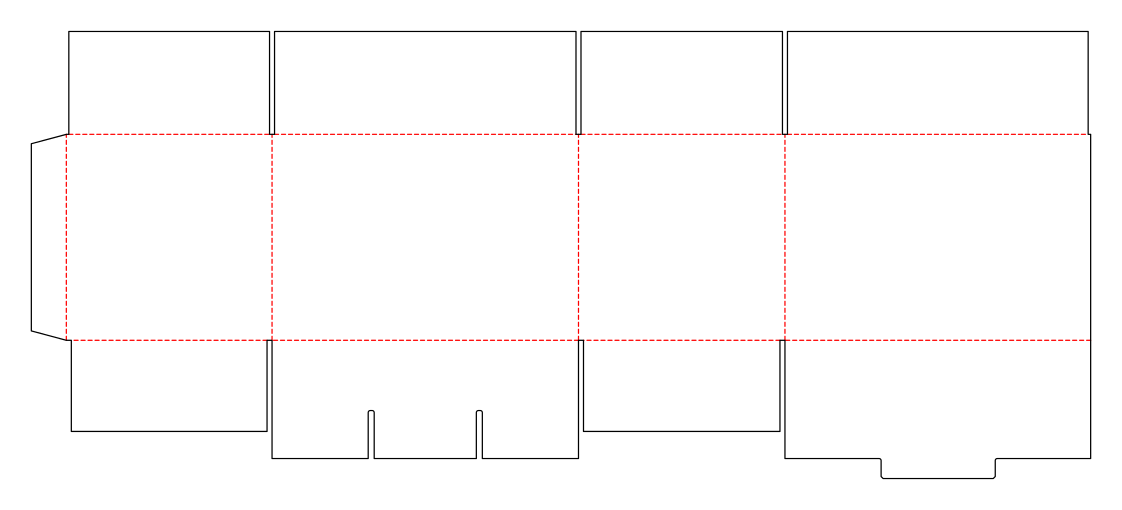 CorrugatedSlotted container with snap-lock bottomcorrugated.rsc.mixed
Customise the Corrugated telescope box in your browser
Set dimensions and material, review findings and export print-ready as PDF, SVG or DXF.