Flat products
Card sleeve
Folding carton with a glue flap and one tuck flap each at the top and bottom; both tuck flaps are attached to the front.
Opens the online editor with this template. Try it without payment details; export with Pro.
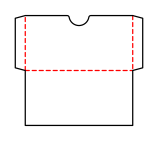
- Template
- Card sleeve
- Category
- Flat products
- Dimension reference
- Nominal size
- Default dimensions
- 85.6 × 54 × 0 mm
- Parameters
- 7
- Version
- v1
- Template ID
- card.sleeve
Dimensions and limits
Default dimensions of the template and the permitted range in mm.
| Dimension | Default | Range |
|---|---|---|
| Width | 85.6 mm | 40–250 mm |
| Height | 54 mm | 40–250 mm |
| Corner radius | 0 mm | 0–∞ mm |
Parameters of this construction
7 parameters with default value and limits, adjustable in the editor.
| Parameter | Default | Range | Note |
|---|---|---|---|
ClearancecardClearance | 1 mm | 0–3 mm | Allowance at each side and the bottom for easy card insertion; also includes material thickness. |
Glue flapglueFlap | 10 mm | 8–20 mm | Width of the glue flap used to glue the blank into a tube. The material requires a minimum width. |
Glue flap angleglueFlapAngle | 15° | 0–30° | Bevel at the ends of the glue flap; facilitates folding and erection. |
Thumb notchcardThumbNotch | on | on / off | Semicircular cutout centered at the front opening so the card can be gripped. |
Thumb notch radiuscardThumbNotchRadius | 10 mm | 5–25 mm | Radius and depth of the thumb cutout; at most 30 % of card width and 40 % of card height. |
Closure flapcardClosureFlap | off | on / off | Flap at the opening of the back that folds over the opening onto the front. |
Flap depthcardClosureFlapDepth | 20 mm | 10–50 mm | Closure flap depth; at most half the card height. |
Assembly
Pre-break the blank along all creases. Glue the glue flap to the inside of the opposite wall and lay the carton flat. Erect for filling, fold in the dust flaps, and insert the tuck flaps.
Grain direction
Grain direction vertical on the blank (check)
Reference note
No external reference classification stated in the catalog.
Labels such as “similar to FEFCO” or “ECMA family, unconfirmed” are for orientation only. The templates are our own constructions; an assignment to a standard code is unconfirmed and not a trademark claim.
Frequently asked questions about this template
Why does the sleeve grow with flap width?
After assembly, the side flaps lie inside on the front. The model keeps the usable card width plus clearance free between them. glueFlap therefore affects both the outer blank and sleeve width. Do not change the glue flap without recalculating and checking fit.
Can I disable the thumb cutout?
Yes. cardThumbNotch switches the cutout at the front opening. cardThumbNotchRadius applies when the option is enabled and is also limited by card dimensions. Without a cutout, the opening remains straight. Test removal with the actual card, particularly if it projects only slightly beyond the sleeve edge.
How do I add a closure flap?
Enable cardClosureFlap and choose cardClosureFlapDepth. The flap is attached to the back and folds over the opening onto the front. Its depth is limited by card height. It changes the blank and assembly; also check the space for artwork at the opening.
Is the sleeve expanded through the material profile?
The allowance is provided in the cardClearance parameter and also includes material thickness. It must be chosen to suit the target material. The starting profile alone therefore does not confirm practical fit. Check a fully glued sample after drying so that the side seam and bottom do not hinder card removal.
Related templates
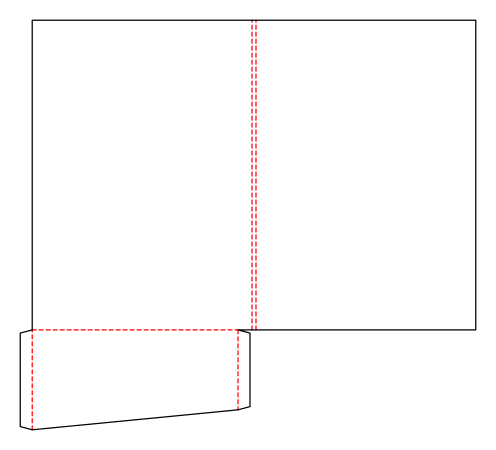 Flat productsPresentation folder with pocketfolder.pocket
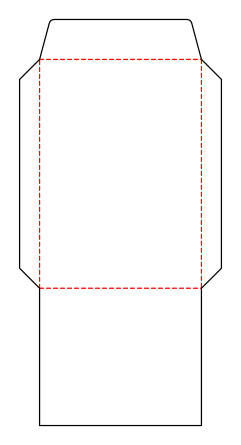 Flat productsEnvelope with side flapsenvelope.pocket
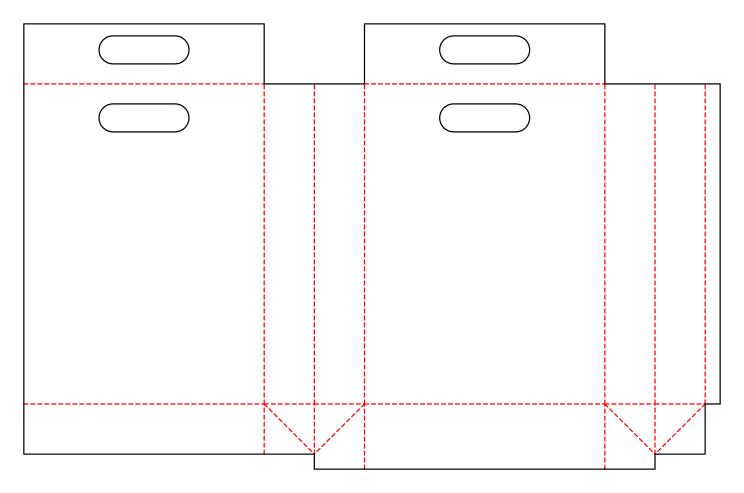 Bags and pouchesCarrier bag with gussetsbag.carrier
- custom.polygonCustom shapeCustom shape with creasescustom.polygon
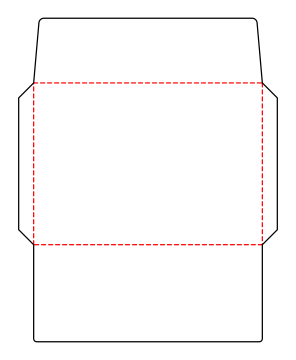 Flat productsWallet envelope with side flapsenvelope.wallet
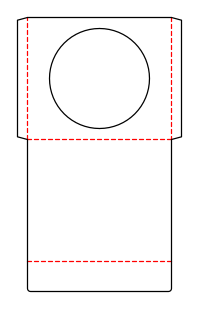 Flat productsCD sleeveenvelope.cd
Customise the Card sleeve in your browser
Set dimensions and material, review findings and export print-ready as PDF, SVG or DXF.